The Hartwell family lived at Holyhead during the second half of the eighteenth century, when three members served as ‘Captains’ of Packet Boats, covering two generations, the earliest of whom appears to have been Captain Joseph Hartwell, who was followed by two of his sons, Edward and Benjamin.
In 1763 there had been three vessels licensed to carry the mails between Dublin and Holyhead, operated by John Power, who was paid £1,080 per annum. In 1768, a further three packet boats were commissioned with the intention of establishing a daily service across the Irish Sea. This situation continued only until 1772 when five independent captains were contracted to provide one packet vessel each viz: the Le de Spenser, Hillsborough, Clermont, Bessborough and Dartmouth, at a contracted annual rate of £380 per ship. Seamen serving aboard them were to be paid 30 shillings per month.
Joseph Hartwell first appears in the records when, as the commander of the ‘Dartmouth Packet Boat’, he was, on 14 May 1775, by Order of the Post Master General, to be ‘employed between Dublin and Holyhead upon the expiration of the present Contract the 10th of October next.’ (Royal Mail Archive, Orders of Appointments, Salaries, Rises, Dismissal, etc, 1737–1774).
The Dartmouth Packet
The Dartmouth was a cutter-built vessel of 73 tons, similar to the small ships employed by the Royal Navy and the Customs service. She would have had a sharp, deep hull with a very large single mast, rigged with a fore and aft mainsail, staysail and jib, which made her a very agile and fast moving vessel, capable of sailing very close to the wind. According to her later sale details she had 18 berths.
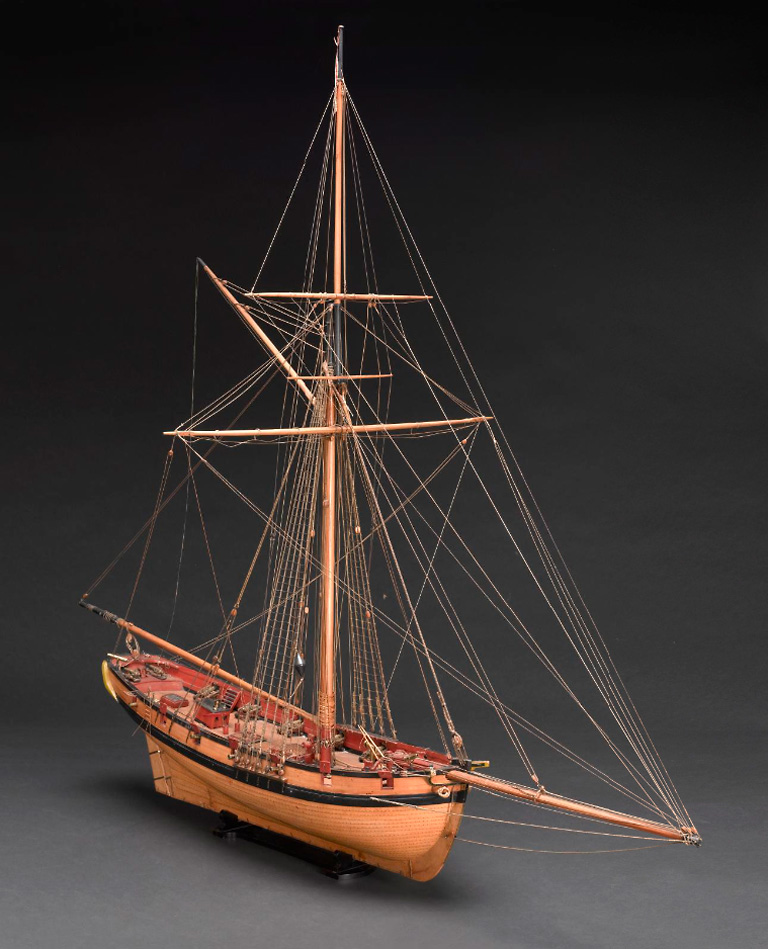
As a ‘packet’ she operated a frequent service across the Irish Sea vessel carrying both official and private mail. Newspaper reports show that she also regularly had on board senior government officials who were travelling from Dublin Castle to London, as well as members of the Irish nobility and gentry, with their families and servants. During the 1770s, senior Army and Navy officers returning from the war in America, crossed the Atlantic to Cork, then journeyed across country to Dublin before continuing their journey to Holyhead on the packet boats.
One advert in the press, dated 13 May 1776, noted that she ‘sails remarkably well and is well fitted out for the Reception of Ladies and Gentlemen. Captain Hartwell is particularly attentive to tender every accommodation.’ (Saunders News-Letter, p.2) Based at Holyhead, the Dartmouth had a crew that was predominantly from Anglesey and, as part of their terms of service, were exempt from impressed service in the Royal Navy.
In 1780 the Rev. Edward Lloyd wrote about his experience whilst undertaking a sea crossing from Holyhead to Dublin on the Dartmouth, then under the command of Edward Hartwell. He joined ‘three land officers, a serjeant, a servant, four Jesuits, a lady and a young boy’. They left Holyhead at 2am and expected to be at Dublin in eight hours. However this was not to be and due to strong and adverse winds it took 28 hours before the vessel anchored in Dublin Bay. All passengers suffered badly from seasickness but in spite of this Rev. Lloyd praised the crew highly – ‘Not withstanding the tiresome and dangerous passage, the mariners, who were all Welshmen, except the captain, were never observed to swear an oath, which reflects no small honour on him and his men’.2
The Hartwell Family
Joseph and his wife Elizabeth had a family of at least seven children: Edward (1751–95); John (1757-1782); Benjamin (b. 1760); William (1765–86); Susannah (1766–82); Charlotte (1769–88); and Thomas (c1770–85). Edward, John and Benjamin were born at Stepney, East London, close to the docks. Another son, Joseph, was baptised in November 1760 at Stepney, the same day as his brother Benjamin. The record indicates that he was 11 years old (b. 1749?).
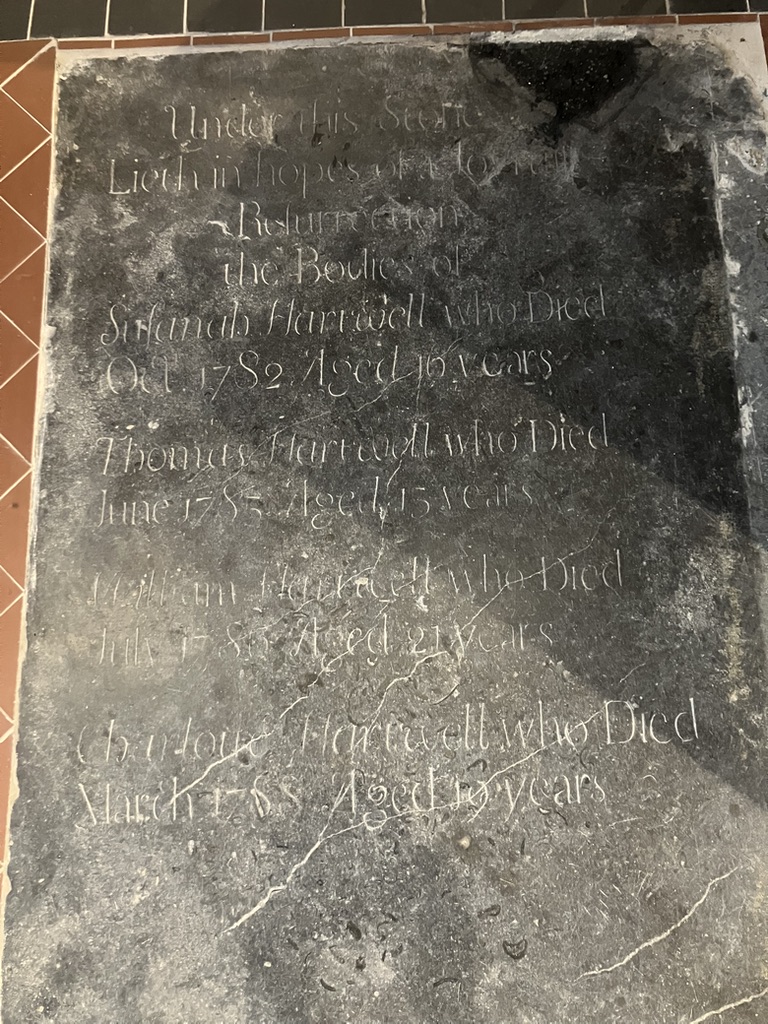
Joseph died in December 1775 and was buried in St Cybi’s Churchyard. His wife Elizabeth died at Liverpool in 1808, aged 86. Sadly five of the children all died within 13 years of their father’s death and at relatively young ages. Their gravestone is at St. Cybi’s Church. John in 1782, aged 25; Susannah also in 1782 (died at Luke Street, Dublin), aged 16; Thomas in 1785, aged 15; William in 1786, aged 21 and Charlotte in 1788, aged 19.
Edward Hartwell followed his father into a career in the mercantile marine. On 5 January 1776 he received his commission as ‘commander of the Dartmouth Packet Boat to be employed between Holyhead and Dublin’. (Commission Book for Packet Ship Captains, Postal Service Appointment Books, 1737–1969, The Royal Mail Archive).
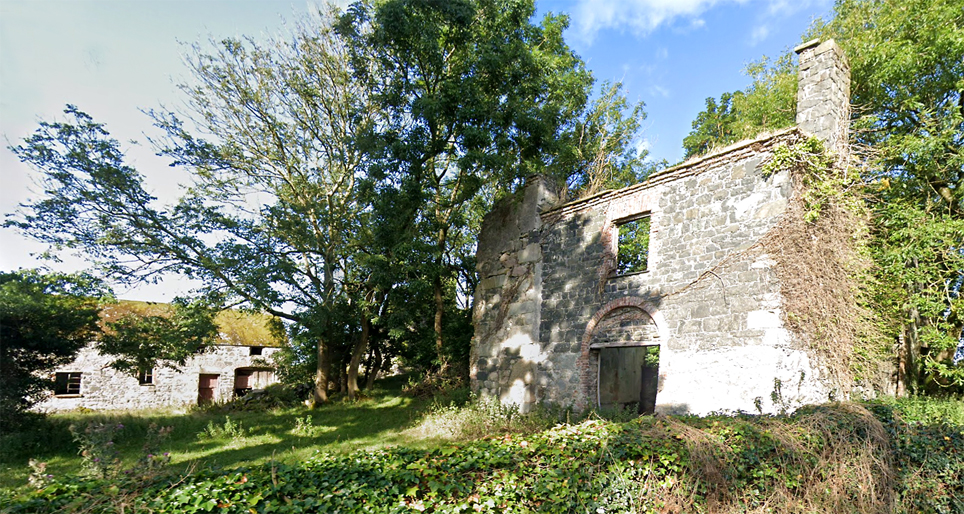
He married Elizabeth, daughter of Charles and Lidia (née Swene) Knowles, her father being the proprietor of the noted Gwyndy Inn, located on the main post road at Llandrygarn (now the B5109), between Bangor Ferry and Holyhead. In 1786, shortly after inheriting the business from his father, Edward appears to have been a shareholder in or co-owner with his brother of a second ship, the Duchess of Rutland, a passenger vessel of 74 tons, described as being an ‘… elegant new vessel constructed by Mr Jordan of Ringford, shipwright’ (Saunders’s News-Letter, 2 June 1786, p.2), which was commanded by his brother Benjamin.
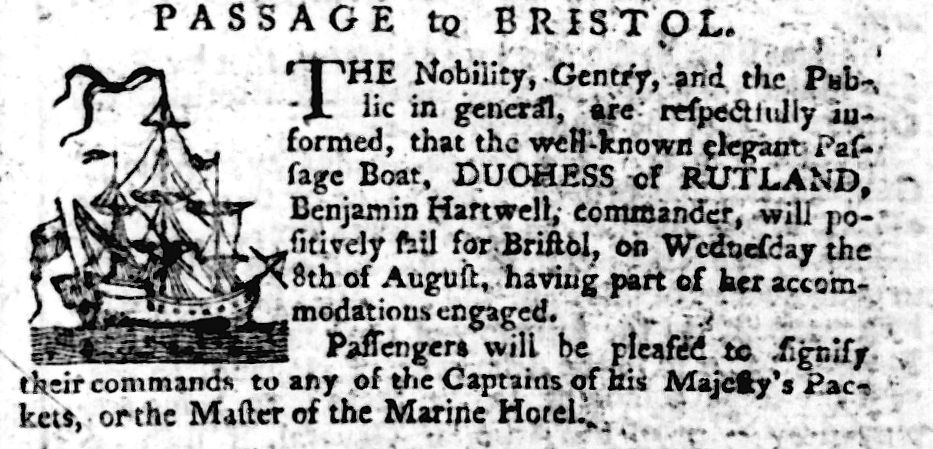
Benjamin Hartwell, appears in the Irish newspapers as being in command of the Duchess of Rutland when she arrived at Dublin in August 1786. In 1787 he was seeking passengers for a voyage to Bristol. He married Susannah Jackson of Holyhead in 1792, the marriage being witnessed by his brother, Edward. He then disappears from the records.
Edward and Elizabeth Hartwell had two children (twins), born in 1794, Joseph William (who died just seven months old) and Elizabeth Anne. Edward died in January 1795, aged 43 and was described on his gravestone in St Cybi’s Churchyard as, ‘an affectionate husband, a tender parent and a sincere friend’. According to his will, he left all his ‘messuages, dwelling houses, lands and hereditaments which I hold under leases situate in the town and parish of Holyhead … and all my leasehold premises whatsoever lying and being in the said County of Anglesey or elsewhere and all my shares in the Dartmouth Packet and the Duchess of Rutland Passage Boat’ to his widow and young daughter.
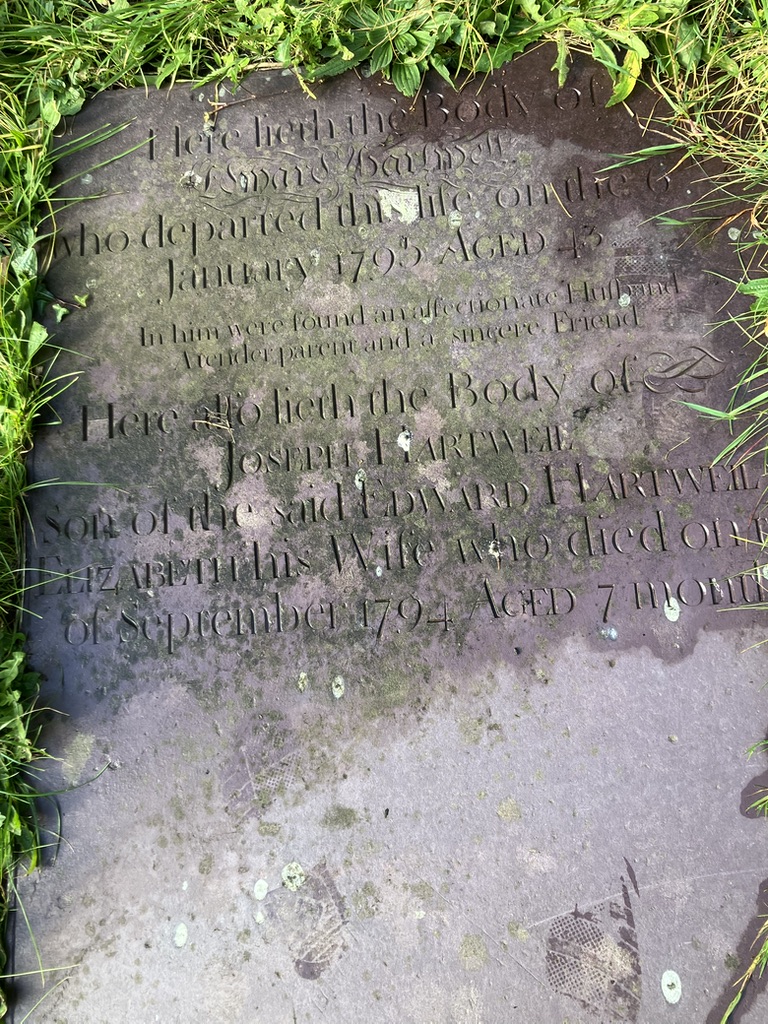
at St. Cybi’s Churchyard
A legal issue then arose whereby Edward’s mother claimed that her son had pledged her an annuity for the whole period of her life, based upon the income he received whilst in command of the Dartmouth. Mrs Hartwell senior now demanded that her daughter-in-law had to continue to pay the annuity. The matter went to law and was heard in the Court of Chancery, no doubt at considerable legal expense, where the decision was that although the annuity had been made for ‘the whole life of the mother’, the subject (Edward Hartwell) was now deceased and, as there was no longer any income generated from her son’s command of the Dartmouth, it would be ‘a monstrous thing to insist upon’ and must have been an unintended mistake.
Clearly, Elizabeth Hartwell was in no position to continue running the business associated with the Dartmouth Packet and in September 1795 steps were immediately taken to dispose of the vessel, which was described in an advert in the Chester Courant as ‘a complete packet, or fit for any other service, and very desirable to any gentleman who might wish to furnish himself with a safe and quick-sailing vessel for his own private amusements.’ Prospective buyers were advised to contact ‘Mr Pritchard of the post-office at Holyhead who was authorized to treat for the same.’
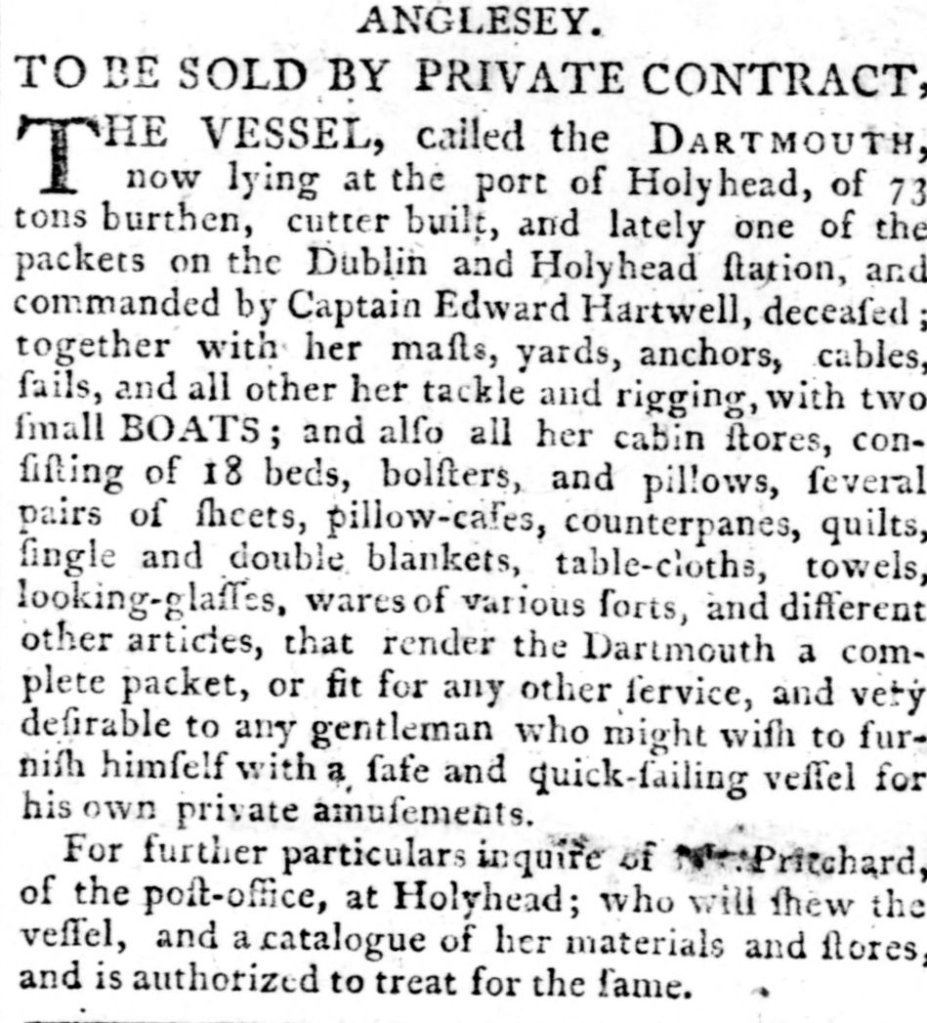
Elizabeth appears to have remained in Holyhead until 1807 when she was appointed Postmistress at Caernarfon, a position that she held until 1833 when she was living at New Street. Her daughter, Elizabeth Anne, moved with her to Caernarfon where she met and in 1822, married John Rowlands, Esq, of Plas Tirion, Llanrug. They had three children, John (1822–85), Elizabeth (1827–97) and Hugh (1828–1909). Elizabeth Hartwell died intestate at Plas Tirion in 1843, aged 82. The detailed probated inventory and appraisement of her estate, showed her to have been in possession of only her household goods, furniture and ‘wearing apparel’ to the value of £40-13s-7d (£40.68) with no vestige of any items associated with her late husband’s career on the sea.
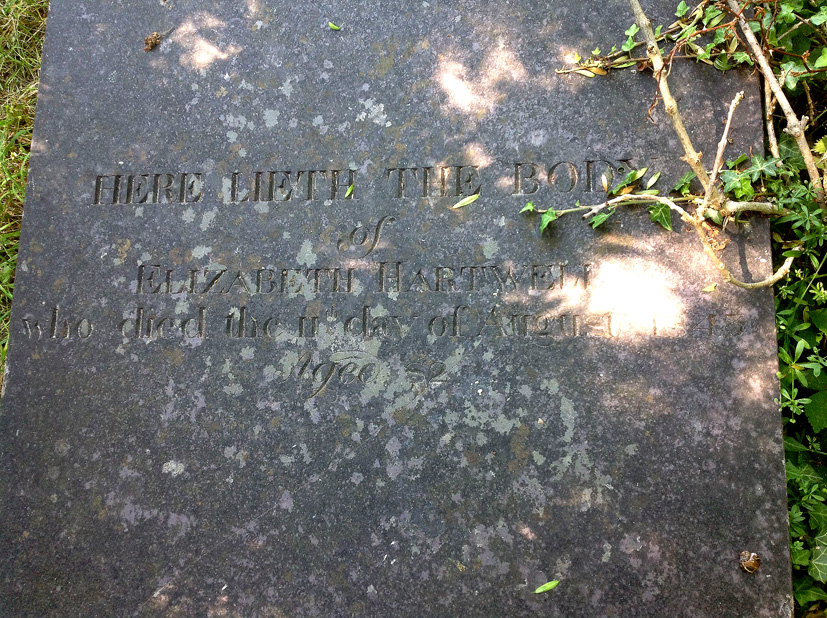
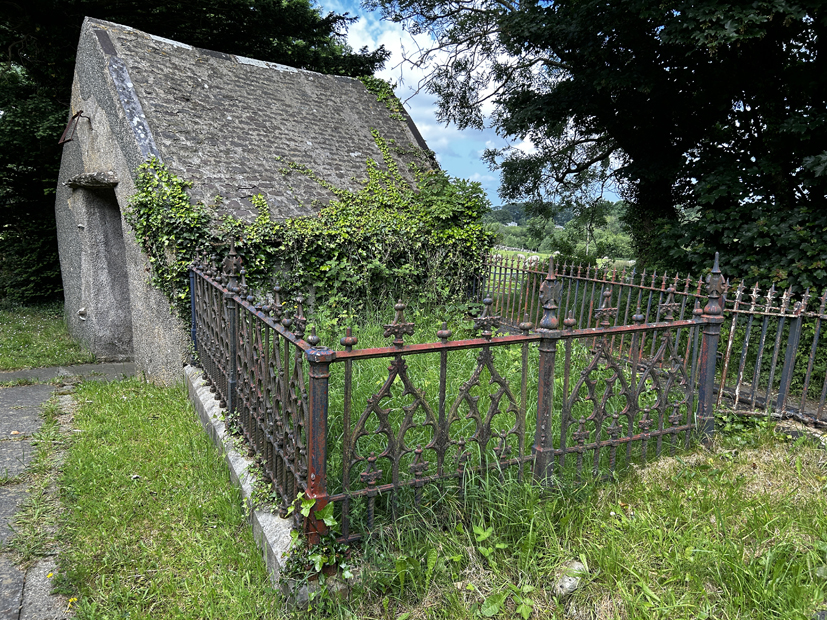
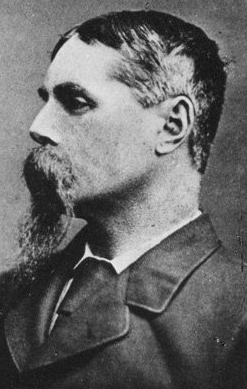
John Rowlands senior, inherited the 1500+ acre Plas Tirion-Bodaden estate in 1830, served as High Sheriff of Caernarfonshire, Justice of the Peace and Captain in the Royal Carnarvon Militia. He died in 1864 when the estate passed to Elizabeth Anne. She died in 1876 and the inheritance passed to her youngest son, then a serving officer in the Army. He became General Sir Hugh Rowlands, VC, KCB, DL, JP, and was the first Welshman to be awarded the Victoria Cross for his conspicuous gallantry on 5 November 1854 at the Battle of Inkerman in the Crimea. He was nominated for a second VC in 1855 for his action during the storming of the Redan at Sebastopol, but the regulations did not then allow for a second award.
Contributed by W. Alister Williams, Wrexham with additions by the Editor
© W. Alister Williams and Holyhead Maritime Museum November 2026
References and Acknowledgements
- Revenue Cutter: Science Museum Group. Rigged model of a late 18th century naval Revenue Cutter. 1877-417 [Science Museum Group Collection Online. Accessed 5 November 2026. Creative Commons Licence.https://collection.sciencemuseumgroup.org.uk/objects/co40787/rigged-model-of-a-late-18th-century-naval-revenue-cutter.].
- Lloyd, Edward, (Rev.) A month’s tour in North Wales, Dublin and its environs. (G. Kearsly: London, 1781)
- Photo of General Hugh Rowlands from https://vcgca.org/our-people/profile/908/Hugh-ROWLANDS

