The following article commemorates the loss 350 years ago of an unique and historically important vessel, ‘His Majesty’s Yacht Mary’ – the first Royal Yacht. The circumstances of her shipwreck in 1675 on Anglesey’s Skerries Islands are well documented. What is less well known is the story of the discovery of the wreck in 1971 and the recovery of her eight bronze cannon and over 1,500 other historically important artefacts.
We are grateful to Joe Caddick for contacting the museum to remind us of the anniversary of the tragedy. Joe was the leader of the diver group that raised these historical items from the seabed and ensured that they were placed in the care of the proper authorities. Joe has allowed the Holyhead Maritime Museum access to his records and many accompanying photographs.
The ‘Mary‘ was built by the Dutch East India Company in 1660 and then purchased by the City of Amsterdam, embellished and presented to Charles ll on his restoration to the English throne in 1660. Her cabins were decorated with gold leaf; her furniture was upholstered in leather and a white unicorn adorned her bows.

Of 92 tons and measuring 67ft x 18ft, she was armed with eight 3-pounder guns. The vessel was built for speed and had leeboards in order to combine a large sail area with a shallow draught. She was gaff rigged with a long spar supporting the mainsail. The ‘Mary‘ was the first official royal yacht and was initially used by the King for pleasure and to visit his fleet. She was later taken over by the Royal Navy in 1666 and carried officials and other notables, mostly over to Dublin.

On 25th March 1675, the ‘Mary‘ was on passage from Dublin to Chester under the command of Captain William Burstow. The vessel had a crew of 27 and carried 46 passengers, including the Earl of Ardglass and the Earl of Meath, accompanied by his son. The vessel, after crossing the Irish sea, encountered dense sea fog off the Welsh coast and tragically hit a rock on the west side of the Skerries Islands, located off the north-west coast of Anglesey. She became wedged in a gully, tilting over towards a high rocky outcrop. This allowed 39 passengers and crew to climb ashore and scramble to a safe place. The captain bravely went back along the mast to try and save the Earl of Meath who was unable to climb unaided. Tragically this resulted in both losing their lives. It was two days later when a passing vessel from Beaumaris rescued the survivors. In the meantime they set alight to gunpowder flasks for warmth and drank whiskey from kegs salvaged from the wreck.

The wreck lay undisturbed until July 1971 when the site was discovered by divers from two British Sub Aqua Clubs – Merseyside and Chorley.
On a fine sunny day on the 11th July 1971 a group of divers from the Merseyside club were at Skerries intending to dive on the cargo ship, SS Castillian, sunk in 1943. Weather conditions forced a change of plans and the group moved closer to the Skerries islands to undertake a safer dive. It was here that the divers came across a bronze cannon and then shortly afterwards located the main wreck site with more cannon apparent.
The Chorley group were also diving close by and had coincidentally also located a cannon. The Chorley group managed to raise their cannon after the Merseyside group had returned to Holyhead. The Chorley group declared the cannon to the Receiver of Wrecks at Holyhead who then contacted Dr. Peter Davies of the Council for Nautical Archaeology at Liverpool. The same day the Merseyside group also contacted Dr. Davies for advice on the cannon they had found at the main wreck site. Dr. Davis realising the importance of the find advised that the two groups work together and help firstly to undertake a pre-disturbance survey and then to participate in an organised Marine Archaeological Expedition to record and excavate the site.
By 21st July the expedition was underway with one of the Merseyside divers, Joe Caddick, in command of the recovery vessel, ‘Francis Sea’. By this time all the evidence was supporting the view that the wreck might be the lost royal yacht ‘Mary’. The pre-disturbance survey had located one Dutch four pounder bronze cannon and six English three pounder bronze cannon together with a large collection of cannon balls, too large for the guns. (These turned out to be ballast for the shallow draft vessel). Also identified was one small bronze bow chaser cannon.
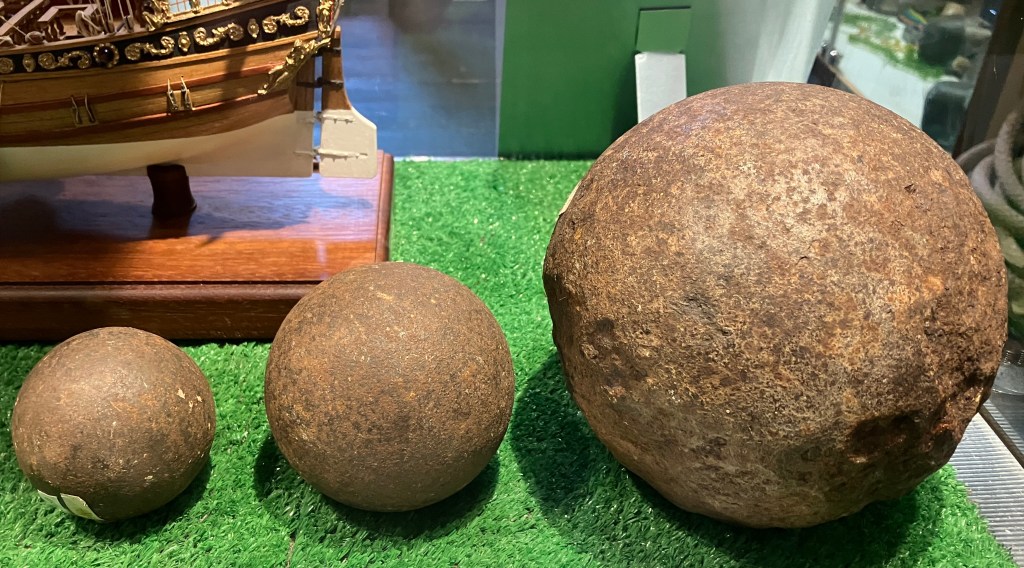
Before the cannon and other artefacts could be recovered it was decided by the experts advising the expedition that the site should undergo a complete and detailed archaeological survey. However the group were becoming concerned about the ongoing security of the site as news of the finds was now common knowledge locally. Wreck sites of this nature have little protection in law and after it became evident that a ‘pirate’ diving group had removed some of the artefacts without reporting them to the Receiver of Wrecks, it was decided to raise the cannon without delay.
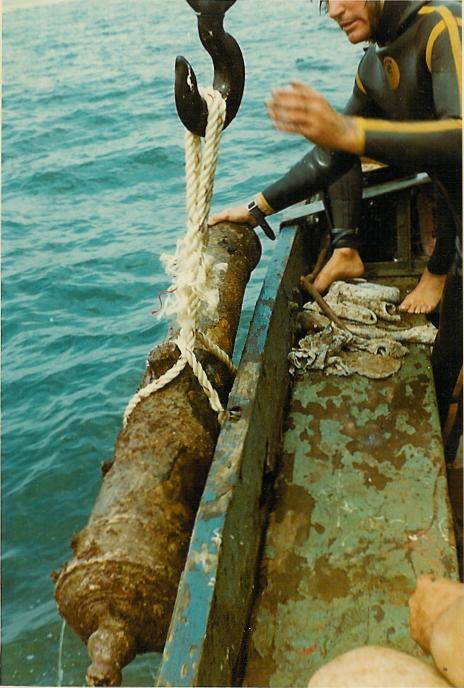
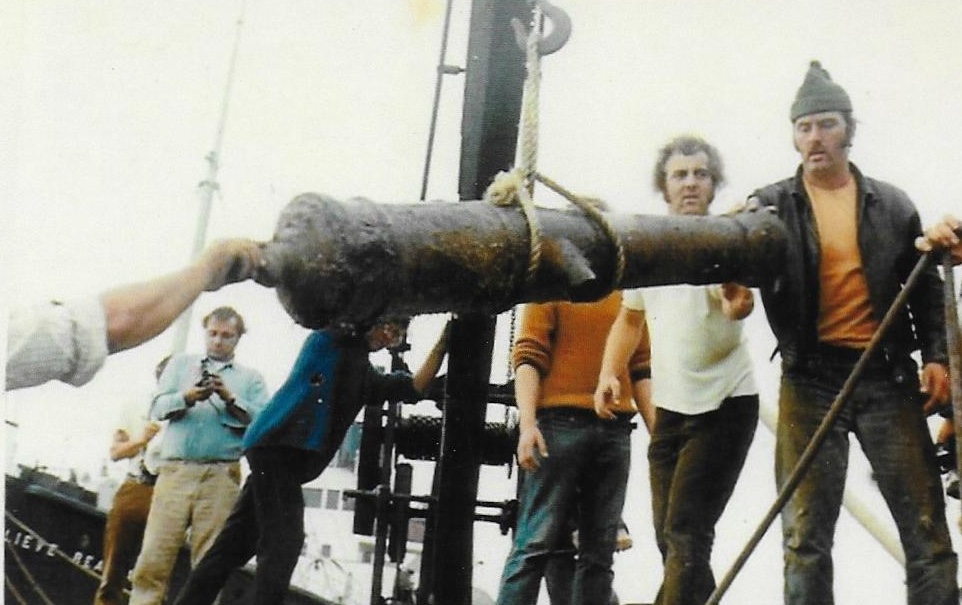
Happily those items removed from the wreck site by the ‘pirate’ divers, and never reported to the Receiver of Wrecks, were eventually recovered. Throughout the work to recover the remaining cannon and other artefacts the expedition was regularly interfered with and challenged by other diving groups. One such group even attempted to intimidate the members of the expedition by discharging a shotgun. However, four days after commencing the recovery of the bronze cannon all eight were taken into the care and conservation of the Liverpool Museums.


In total over 1,500 items were recovered from the wreck of ‘HMY Mary‘. Among many day to day items were numerous pieces of jewellery and over 600 silver coins. Illustrated below is a silver lion’s head thought to be from the butt of an ornate pistol or possibly an adornment on the top of a staff.

The experience by those involved served to highlight the short comings of the law to protect historially important wreck sites such as the ‘Mary’. The significance of this was eventually recognised by the Government and wrecks such as the ‘Mary’ are now covered by the ‘Protection Of Wrecks Act 1973’.
It’s now well over 50 years since the wreck with its historically important artefacts was located. The divers who remain are no longer young men and they are probably justifiably disappointed that the artefacts they worked hard to recover and then handed over to the Liverpool Museums have never been on permanent display and as a result they believe that the full story of ‘HMY Mary‘ risks being lost to future generations.

© Joe Caddick and Holyhead Maritime Museum March 2024.
The photographs relating to the recovery of the artefacts from the ‘Mary’ are the property of Joe Caddick. Those taken at the Holyhead Maritime Museum are the property of the museum. The image of the Skerries is from Google Maps.
 Holyhead: Stories of a Port
Great Post.
LikeLike