Holyhead Women of the Great War

This post is one of a continuing series to showcase some of the special objects we have as part of Holyhead Maritime Museum’s collection.

There are a number of memorial plaques on view at the museum. These were made of bronze and issued to the next of kin in remembrance of those lost during the Great War of 1914-1918. Each one is inscribed with the name of the person who died. Over one million were issued.

Only 600 were issued in memory of women who lost their lives due to the war. The plaque below is in the name of Stewardess Louisa Parry from Holyhead, who died in the torpedoing of RMS Leinster in October 1918. Whilst the ship was rapidly sinking she went to a lower deck to the aid of a woman and child but became trapped with them in their cabin as the waters rose.

cropped-louisa_parry_mem_pl1
Louisa Parry’s Memorial Plaque on display at the Museum

The sinking of RMS Leinster resulted in the loss of over 650 lives including another Holyhead Stewardess, Hannah Owen. Both she and Louisa worked in hospitals before being employed by the City of Dublin Steam Packet Company. Hannah was 36, unmarried and had worked for the CoDSPCo for 12 years. She lived with her family at 2 Tower Gardens, Holyhead. Her Memorial Plaque was sold at auction in 2006.

Louisa, aged 22, was one of nine children, two of her sisters were also employed as Stewardesses, one of which was ill on that day and Louisa sailed in her place. The family lived at 5 Fairview, Holyhead. It is believed that Louisa was engaged and soon to marry an Army officer.

Hannah Owen and Louisa Parry

Hannah and Louisa were among a number of Holyhead women who worked as Stewardesses on the Irish Sea vessels operating out of the port. Each crossing had its dangers not only from the forces of nature but as the war progressed enemy submarines began to hunt and attack vessels of both the CoDSPCo and the LNWR. The official crew lists for 1915 include the names of 16 Stewardesses from Holyhead. Their duty, if the vessel was attacked, was to attend to the safety of women and children passengers, probably putting their own lives at risk.

The Great War also claimed the lives of two other Holyhead women. Margaret Williams was lost in the tragic sinking of the LNWR vessel, SS Connemara, at Carlingford Lough following a collision with SS Retriever. During a fierce storm and under restricted wartime lighting, this was one of the ship’s regular crossings from Greenore in Ireland to Holyhead. It is believed that this voyage was meant to be Margaret’s last before leaving to get married. She was then aged 32.

Annie Roberts from 6 Ponthwfa Terrace, Holyhead joined the WRAF in May 1918 and was based at Hooton Hall, Cheshire. Aged only 20, she was one of many who sadly succumbed to the influenza epidemic.

The 1920 book ‘Holyhead and the Great War’ by R E Roberts records that 62 women from the town served in uniform – WRNS (4), WAAC (12), National Army Catering Board (8), Land Army (12) and Munitions (26). In addition, close to 40 women served as part of the Red Cross effort in the many hospitals and convalescence homes of the area.

17861594_1422125044520296_5282626366850525832_n
Volunteer Nurse Katie Evans of Holyhead

Not all Holyhead’s losses are recorded on the town War Memorial (The Cenotaph). Catherine (Katie) Evans, from Bryniau Llygaid Farm, Holyhead, was a volunteer nurse for the Red Cross Voluntary Aid Detachment (VAD) based at Holyhead during WW1. Katie served with the No. 8 Anglesey Detachment but sadly died on 16 October 1914. Although not commemorated on the Holyhead Cenotaph, she is listed on one of the panels in York Minster commemorating members of the nursing services. Katie was unmarried and only 34 years old when she died following an operation for a perforated ulcer. On the day after her funeral, her sister Pollie Evans volunteered for the VAD.

Contributed by the Editor.

With special thanks to Simon and Jon McClean who donated the memorial plaque of their great-aunt, Louisa Parry, to the museum and also allowed her photograph to be published.

Note: When the memorial plaques were first designed it was not envisaged that they would be needed in memory of women and modifications were necessary to change the ‘HE’ into ‘SHE’. To enable the ‘S’ to be added a much narrower ‘H’ was inserted to make space for it.

© Holyhead Maritime Museum

This series of posts is to showcase items from the museum’s collection and to support the ‘Ports, Past and Present’ project that features and promotes five ports of the Irish Sea connecting Wales with Ireland – Rosslare, Dublin Port, Holyhead, Fishguard and Pembroke. More information here – https://portspastpresent.eu/

HMS Tara and the ordeal in the Red Desert

This post is one of a continuing series to showcase some of the special objects we have in Holyhead Maritime Museum’s collection.

The two small items below could seem very insignificant to many when seen on display at the museum. However they help to tell the story of the loss of the Holyhead ship HMS Tara  (ex. SS Hibernia) in 1915 and the ordeal faced by the crew during their 4 months of captivity.

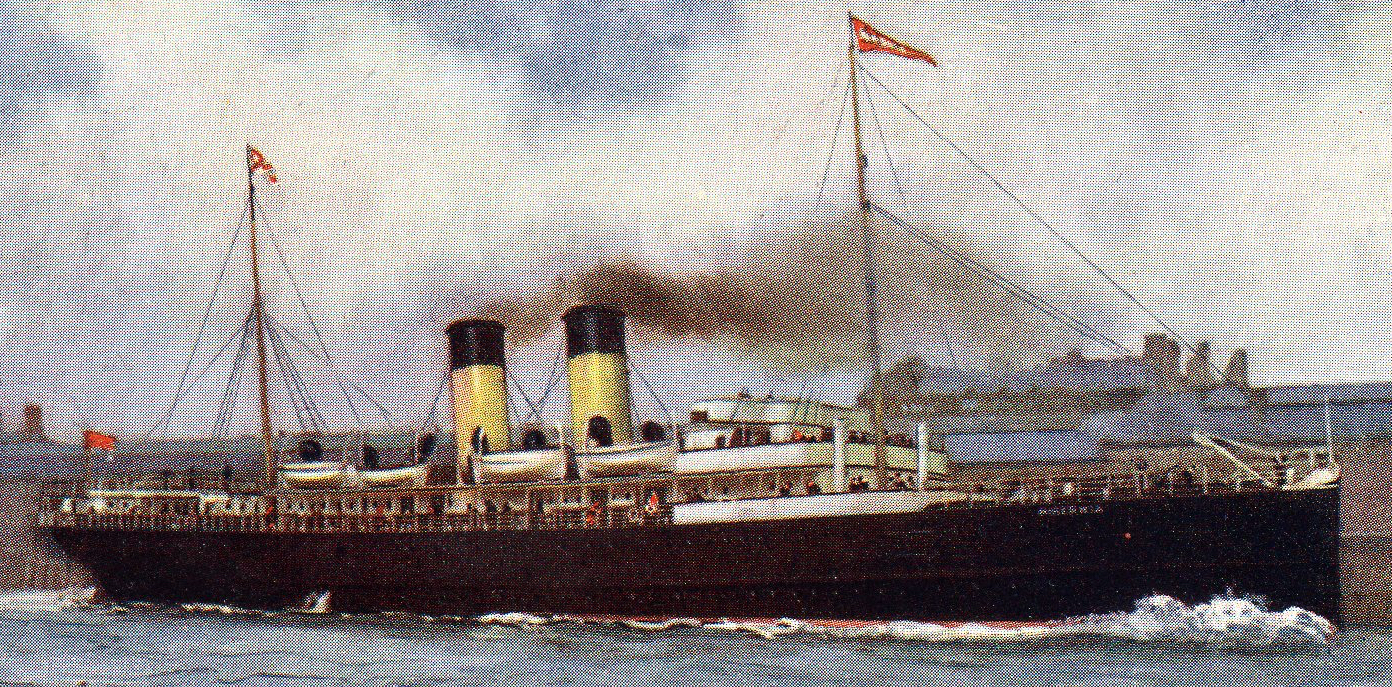
SS Hibernia was built by William Denny and Brothers, Dumbarton, Scotland for the London and North Western Railway, entering service on the Holyhead to Ireland route in 1900. Soon after outbreak of war in 1914, along with three other Holyhead ships of the LNWR, she was requisitioned by the Admiralty as an Armed Boarding Steamer and commissioned as HMS Tara. She was quickly armed with three 6-pounder guns.

The ships crew, mostly from Holyhead and Anglesey, were largely retained with the addition of some RN and RNR officers. The ship was under the joint command of the ship’s Master, Captain Edward Butler Tanner and Captain R Gwatkin-Williams, RN. In late October 1915, after service in the north Irish Sea, she was transferred to the Mediterranean to relieve her sister ship, HMS Scotia. She then had a crew of 104 men.

1SS_Hibernia_1
SS Hibernia in her LNWR Colours

In the morning of  5 November 1915 she was patrolling off the coast of Sollum, North Africa at just over 7 knots. Just after 10.00am the ship’s lookouts were shocked to see a torpedo heading their way. The Helmsman attempted to avoid the torpedo, but due to her slow speed, the ship didn’t come around in time.  The torpedo launched by the German submarine U-35 struck the ship amidships on the starboard side.

Twelve crew members, mostly from the Engine Room, were lost during the ships sinking. The remaining 92 survivors took to the lifeboats which were then towed to Port Bardia by the U-Boat and handed over to Senussi tribesmen as prisoners. They were then marched deep into the Libyan dessert. They suffered great hardship for 4 months whilst held captive by their Senussi guards at a remote desert Wadi.

Among the numerous artefacts at the museum’s Tara Display, probably the most poignant are pictured above. The small glass was used to measure one man’s portion of rice per day, if any was available. The men hunted for snails among the rocks surrounding the Wadi to supplement their very meagre diet. Unfortunately the conditions began to affect the health of some of the crew resulting in the eventual death of five men from dysentery and malnutrition.

With very little to occupy their minds some of the men turned to making items out of whatever they could find to hand. The small bone brooch carved with the name of ‘Cissie’ was made by one of the ship’s Quartermasters, Richard Williams from Holyhead. He was 47 at the time and had four sons and two daughters, one of them adopted. It could be said that carving the brooch was an act of optimism by Richard in the belief that he would indeed see his family again and be able to hand this keepsake to his 12 year old daughter, Mary Elizabeth, known to the family by her pet name, Cissie.

Royal Royce Libyan desert
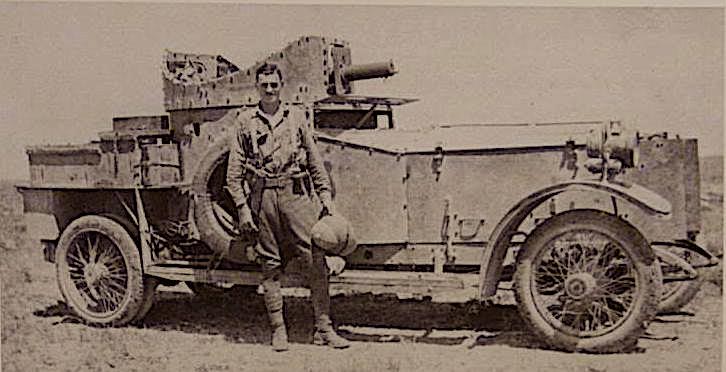
One of the Duke of Westminster’s Armoured Cars operating in the Libyan Desert.

On Saint Patrick’s Day, 1916 a British armoured car column led by the Duke of Westminster reached the Wadi and rescued the sailors. After time recovering at Alexandria they returned home to their overjoyed loved ones.

Contributed by the Editor.

© Holyhead Maritime Museum

The Connemara/Retriever Disaster of 1916

This post is one of a continuing series to showcase some of the special objects we have in Holyhead Maritime Museum’s collection.

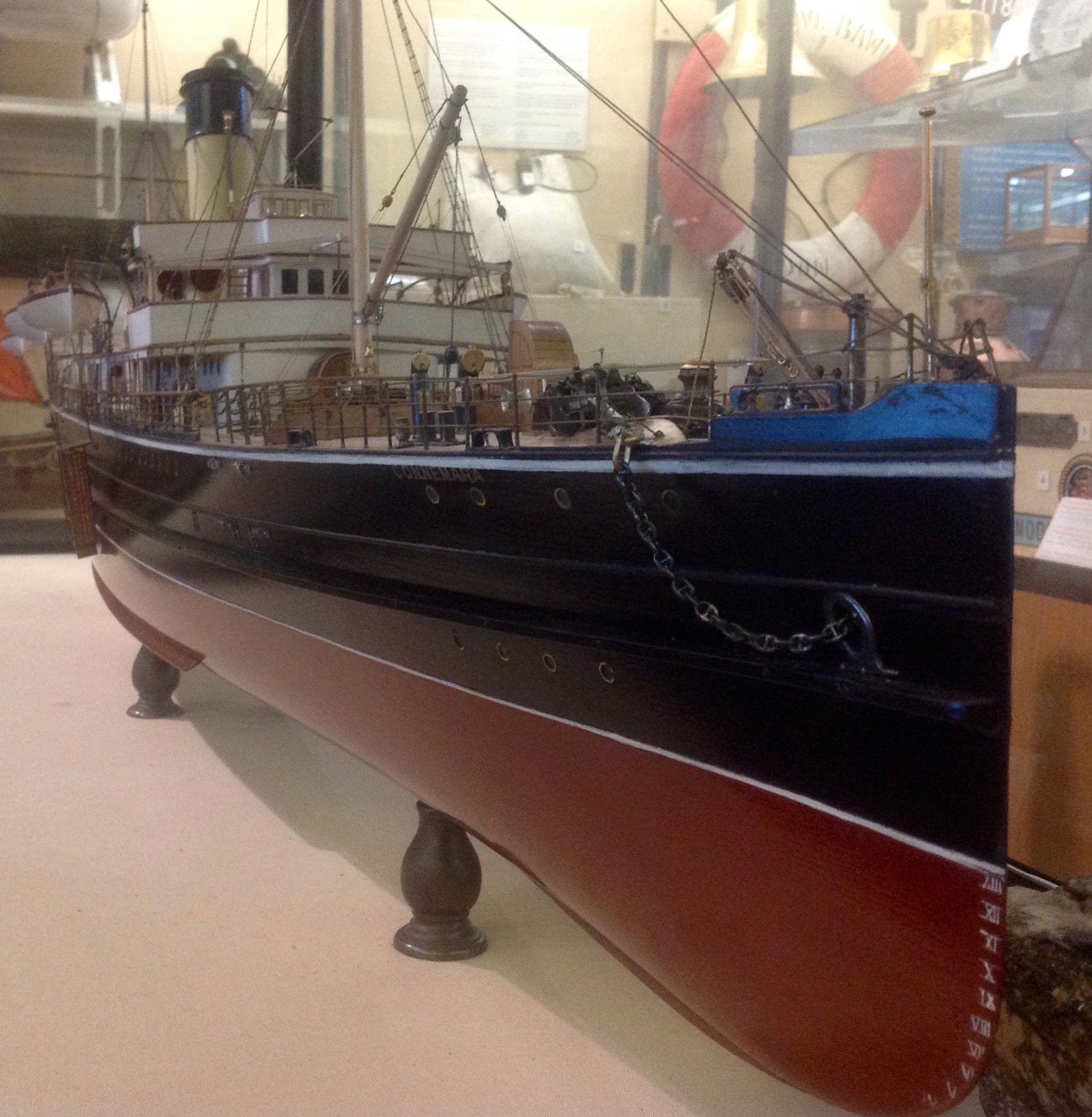
Our museum is no different to many other maritime museum in that we have on display many models of ships, past and present. Among our collection is a large scale model of ‘SS Connemara’, a ship built by William Denny and Brothers at Dumbarton in 1896. This model has come to represent a tragic story of loss at sea.

46477133_2095390683860392_3108387983825305600_o
The model of ‘SS Connemara’ at the museum

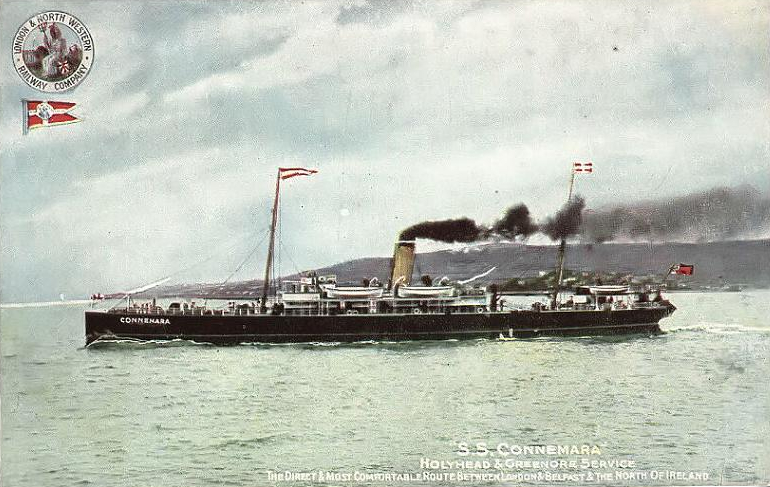
At 8:00pm on the 3rd November 1916, the ‘SS Connemara’, a twin-screw mail packet steamer, owned by the LNWR company, left her berth at Greenore in Ireland and started her daily run to Holyhead in Wales. Her crew of 32 were mostly from Holyhead and on that journey, she carried 51 passengers and a general cargo including livestock.

Captain Doeg on the bridge of the ‘Connemara’ knew of the south-westerly gale blowing in the Irish Sea, and that he must take particular care navigating the narrow exit from Carlingford Lough, whilst showing only limited lights in case of U-boat attack. He was also aware of the 8-knot ebb tide, but as he approached the Haulbowline lighthouse he did not know that the ‘Retriever’ – a three-masted, steel-screwed coaster with a crew of 9 – was about to enter the lough bound for Newry, having sailed from Garston on the Mersey and heavily laden with coal.

Ciq12vVW0AAte_o
‘SS Connemara’ on passage across the Irish Sea

Unfortunately the cargo of coal had shifted as the ‘Retriever’ made for her home port and the ship experienced extreme difficulties maintaining her course in the heavy seas. The lighthouse keeper at Haulbowline noticed that the ‘Retriever’ was not in her allotted shipping lane and he fired a warning rocket, but to no avail. The ebbing tide and the gale force wind forced the ‘Retriever’s’ bow to turn and she struck the ‘Connemara’ amidships on her port side. Water poured in and the boilers of the mail packet steamer exploded. The vessel sank almost immediately and the ‘Retriever’, badly damaged, floundered some minutes later.

IMG_2878
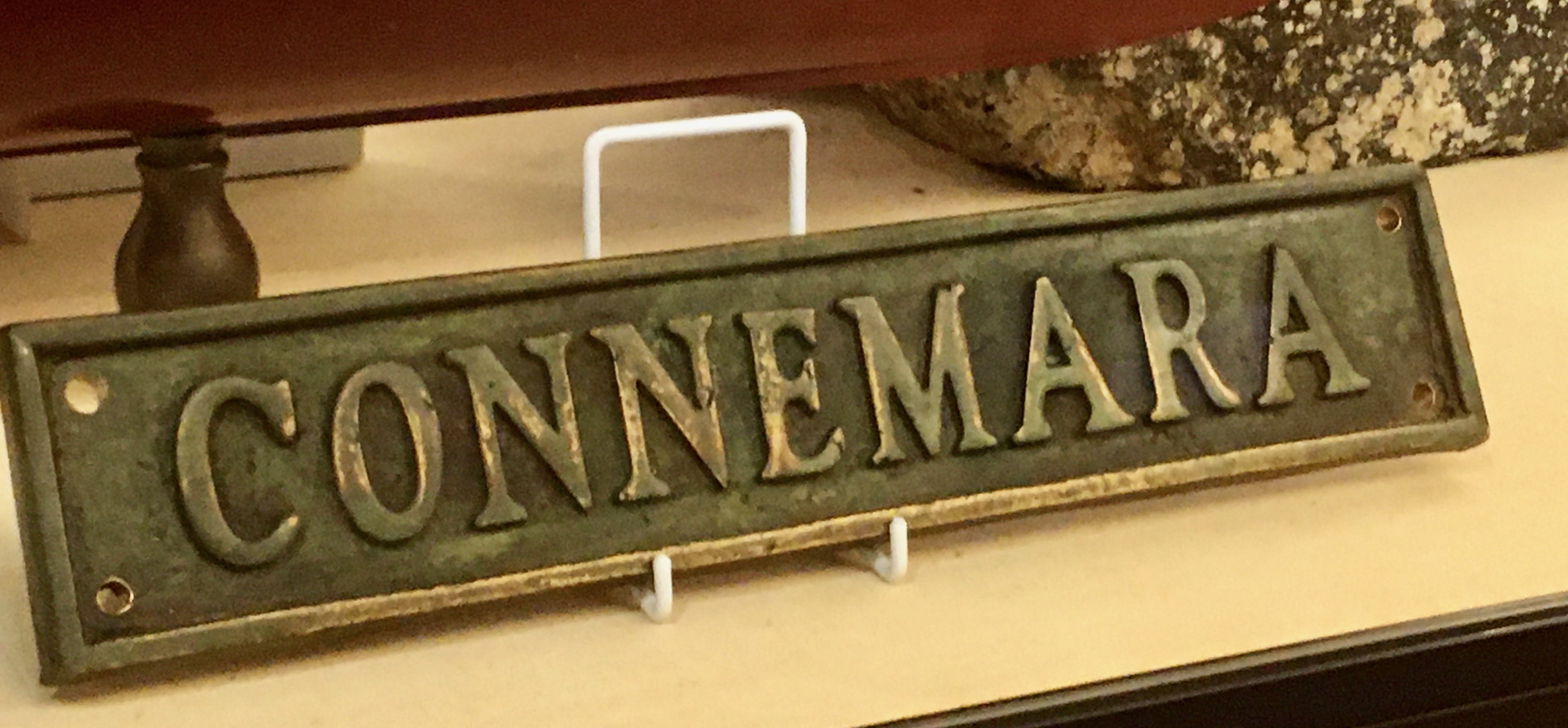
Name plate from ‘SS Connemara’ kindly donated by our friends at the Greenore Maritime Museum

There was only one survivor (a crewman from the ‘Retriever’) and over 90 people, crew and passengers from both ships, lost their lives, including 26 from Holyhead. A subsequent Board of Trade inquiry judged this to be a tragic accident and that no blame could be apportioned, but the terrible tragedy added to the grief of so many families already trying to cope with the horrors of the Great War.

This sad episode exemplifies the dangers ever-present when ships are at sea, but also highlights the clearly defined trade routes of the north Irish Sea – the Mersey ports, the Irish ports of Greenore and Newry, and the Welsh port of Holyhead – all playing crucial roles during this time in history.

Contributed by Dr. Gareth Huws.

© Holyhead Maritime Museum

This series of posts is to showcase items from the museum’s collection and to support the ‘Ports, Past and Present’ project that features and promotes five ports of the Irish Sea connecting Wales with Ireland – Rosslare, Dublin Port, Holyhead, Fishguard and Pembroke. More information here – https://portspastpresent.eu/
RNLI Gold Medal Rescue

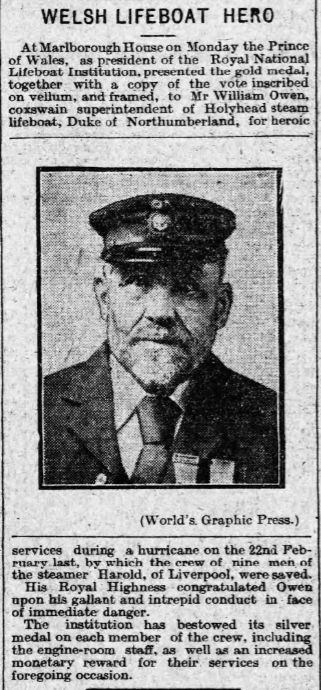
This post is one of a continuing series to showcase some of the special objects we have in the museum’s collection. The Gold Medal we feature was awarded over a hundred years ago to William Owen, Coxswain of the Holyhead Lifeboat. It is a story of absolute bravery in the face of a raging sea to save the crew of 9 on the little steamer, ‘SS Harold’. It is also the story of the RNLI’s first steam driven lifeboat.

‘The Duke of Northumberland’ lifeboat was revolutionary in that she used water jets instead of propellers. Water was drawn in through the forward section of hull and forced out at great pressure through the vents in the side of the boat. This made it a lot more maneuverable than other lifeboats. Not having a propeller she was also less likely to become tangled in ships rigging. She was built in 1886 and first went into service at Harwich in September 1890. The lifeboat’s first period at Holyhead was from 1892 to 1893 and she returned to service in the port in 1897.

Lifeboat1
William Owen and his Gold Medal displayed at Holyhead Maritime Museum

In late February 1908, the steam vessel ‘Harold’ was carrying china clay from Teignmouth to Liverpool. In foul weather her engines broke down and becoming unmanageable she anchored between the south and north stacks off Holyhead, but she started drifting and became dangerously close to rocks between the two headlands.

holyhead_rnli_crew_recreate_historic_photo_to_commemorate_coxswains_retirement2
The ‘Duke of Northumberland’ at Mackensie Pier, Holyhead in the early 1900’s.

At 2pm on February 22, 1908 ‘The Duke of Northumberland’ was called upon to give assistance and was launched into very rough seas. In fierce winds of near hurricane force she took two hours to reach the ill-fated Liverpool steamer. Despite mountainous seas, the able work of the coxswain maneuvered the lifeboat near enough to the ‘Harold’ to enable six men to be taken off the stricken vessel by line. The last three men were able to jump aboard the rescuer. All the crew were saved but the ‘Harold’ foundered the next day.

1479418_564721333605323_66047421_n
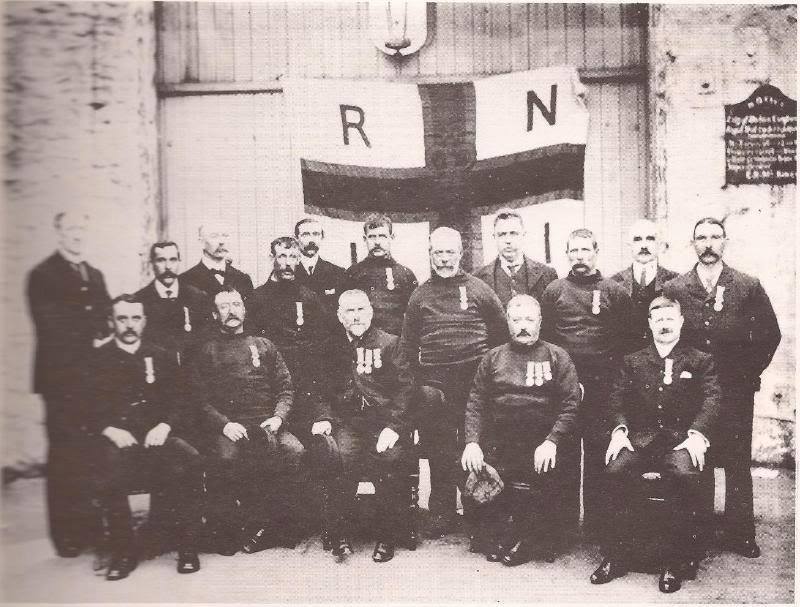
Coxswain William Owen with his crew at the Lifeboat Station after the award of their medals

Due to his skill and courage during the rescue, Coxswain William Owen was presented with the RNLI’s Gold Medal and the rest of the crew (including Owen’s son) were presented with Silver Medals. This is one of four Gold Medals awarded to the Holyhead Lifeboat Station. Coxswain Owen had previously been awarded the Institute’s Silver Medal and the Silver Medal of the Liverpool Shipwreck and Humane Society for the rescue of three of the crew of the ‘Tenby Castle’ in December 1889.

Screenshot 2020-08-01 12.33.47

William Owen was presented with his Gold Medal by the Prince of Wales at Marlborough House, London on Monday 4 May 1908.

William Owen served as Coxswain from 1899 to 1915. He was also a Trinity House Pilot for 45 years. His obituary on his death in 1921 described him with these words, ‘He was as fearless as a lion, and was ever in the midst of the perils which beset the vast deep’.

Contributed by Aled L Jones.

© Holyhead Maritime Museum

The photograph of the ‘Duke of Northumberland’ is from http://www.rnli.org. The original source is unknown.

The account of the presentation of the Gold Medal to William Owen is from The Cardiff Times of 9 May 1908 – The National Library of Wales.

This series of posts is to showcase items from the museum’s collection and to support the ‘Ports, Past and Present’ project that features and promotes five ports of the Irish Sea connecting Wales with Ireland – Rosslare, Dublin Port, Holyhead, Fishguard and Pembroke. More information here – https://portspastpresent.eu/


The Dutch Poniard

This is a story of two separate wartime friendships that developed into romance but sadly never had the opportunity to blossom fully. It is the story of three young people at the time of war. It is the story of Evelyn, now aged 106.

The item in our collection and linked to the story is a Midshipman’s Poniard, given to junior officers in the Royal Netherlands Navy on their ‘passing out’ as officers. It is worn mainly on ceremonial occasions.

IMG_2908

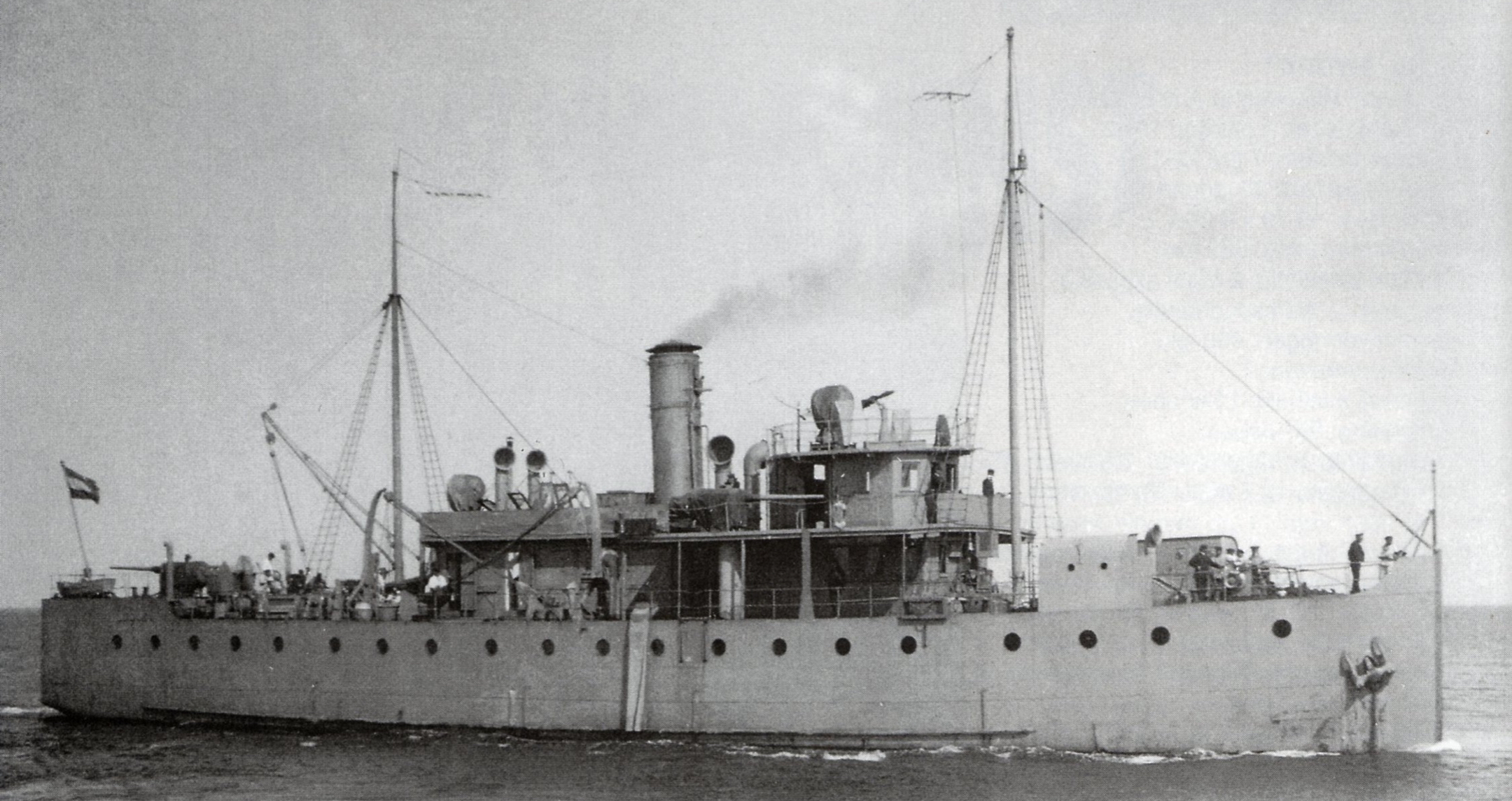
Following the invasion of the Netherlands by German forces in 1940, a number of vessels of the Dutch navy ended up at Holyhead. Initially, the Dutch mariners were looked upon by the local population with a degree of wariness. It wasn’t long before their fears were allayed, with families welcoming them into both their hearts and homes.

IMG_4718
HNLMS Medusa (1911) – Hydra Class Minelayer stationed at Holyhead during WW2

One such Holyhead family befriended a young Dutch student who had travelled to Holyhead from Manchester to join the Royal Netherlands Navy. Han Jordaan became a regular visitor to their house and began dating Evelyn, one of the daughters. Sadly the romance was short lived as Han was seconded to the S.O.E. (Special Operations Executive) before being parachuted into German occupied Amsterdam.

Jordaan was betrayed to the Gestapo after only five weeks.  After aggressive interrogation he was forced to transmit misinformation to his handler in the UK. However, using a special word he was able to alert his handler that his position had been compromised. Sadly Jordaan did not survive the war and died in a concentration camp three weeks before the cessation of hostilities.

Evelyn’s wartime story however did not end there. Several months later she met and fell in love with another Dutch mariner, Jan Christiaan van Aller. He had enrolled as a cadet in the Royal Netherlands Navy in 1939. On his passing out he was presented with his ceremonial poniard or dagger. Following further officer training at Falmouth, Van Aller was posted to Holyhead.

It was at a dance at the Station Hotel that the couple first met and soon became quite close.  At some point in time he transferred to the Marine corps and in January 1942 was promoted to the rank of Sub Lieutenant.

Once again Evelyn’s dreams were shattered when a month later he was posted to Jakarta in the Dutch East Indies. Before departing, the couple vowed they would write to each other and when the war was over he would return.  As a token of his feelings he gave Evelyn his poniard.

In February 1942 Singapore fell to the Japanese and his ship, SS Mentor, was diverted to Suriname in Dutch Guyana. As to where Van Aller ended his war years is unclear. However, due to the fact that the letters suddenly stopped arriving, Evelyn assumed he had been killed. She frequently reflected on ‘what might have been’ before she met her future husband George, whom she married in 1946.

In 2014, Evelyn donated the poniard to the Maritime Museum, a treasured reminder of a typical wartime romance that was not meant to be.

Two memorials to the presence of the Dutch Navy at Holyhead during WW2

Contributed by Peter Scott Roberts and Graham Van Weert from conversations with Evelyn and her family.

© Holyhead Maritime Museum

The image of HNLMS Medusa is from Wikimedia Commons. Original source – Mark, C. Schepen van de Koninklijke Marine in W.O. II Alkmaar: De Alk bv, 1997

This series of posts is to showcase items from the museum’s collection and to support the ‘Ports, Past and Present’ project that features and promotes five ports of the Irish Sea connecting Wales with Ireland – Rosslare, Dublin Port, Holyhead, Fishguard and Pembroke. More information here – https://portspastpresent.eu/