
The Act of Union of 1800 united the Parliaments of Great Britain and Ireland. As a result greater emphasis was placed on the importance of the Irish Sea connection at Holyhead and especially the existing harbour facilities.
Improvements were made to the Old Harbour between 1810 and 1831 but it soon became clear that a Harbour of Refuge would be required to provide a safe anchorage for ships sailing this frequently hostile stretch of water.

In 1847 an Act of Parliament was passed to allow the building of a Harbour of Refuge. The Civil Engineer James Meadows Rendel had prepared plans two years previously for an enclosed harbour formed by two breakwaters. His proposal gained consent over others and construction started in 1848.
The contract was awarded to J &C Rigby, one of the most highly regarded firms of civil engineering contractors in the country. Charles Rigby assumed overall control of the project and took residence at Holyhead.

Over 7 million tons of rock was blasted from the Holyhead Mountain Quarry to form the base of the Breakwater. A giant blast in May 1857 produced more than 160,000 tons of material. The work was hard and dangerous and involved sinking 6 foot (2m) wide shafts to a depth of 60 – 80 foot (18-24m) in the solid rock and then charging them with up to a ton of explosive ‘black powder’.

The staging for the construction of the breakwater was built using 80ft (24m) Canadian Pine logs which were first treated with Creosote before being driven into the bedrock. The quarried stone was dropped around these to form the foundation.

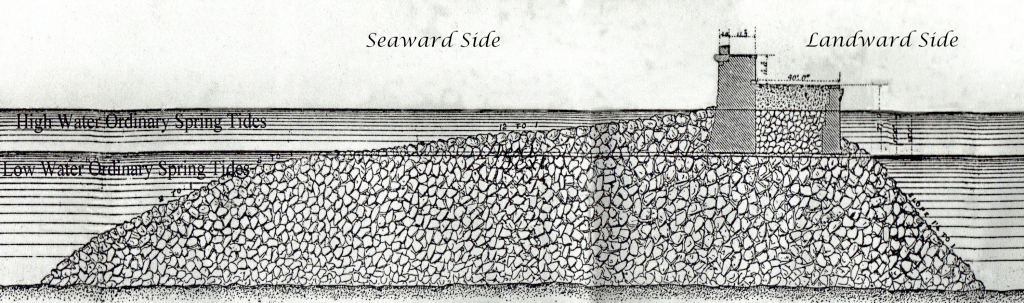
The image below shows the planned construction of the breakwater. An extended bank of stone was placed on the seaward side to help protect the breakwater wall from the very damaging action of a storm driven sea.
Special purpose wagons with a 7 foot gauge track were employed to carry and deposit the stone rubble from the Quarry to form the base of the Breakwater.

The image below shows the extent of the construction of the Breakwater in October 1859 when Brunel’s ship ‘Great Eastern’ visited Holyhead. A ferocious storm caused significant damage to the breakwater, toppling cranes into the sea and putting this huge vessel and others in the harbour in great danger.

Among a number of deaths associated with the building of the Breakwater was that of Captain George Rowan Hutchinson, Royal Engineers. An experienced engineer, he was sent to Holyhead to increase the output of stone from the Quarry.
On 24 February 1851 he was with a number of spectators viewing a blast when a backfiring of a charge in one of the shafts caused a number of large rocks to fall among the spectators. Captain Hutchinson was severely injured and died within a few hours. He was highly thought of and respected by the quarrymen and they made a collection for a memorial stone which was placed on the spot where he was killed.


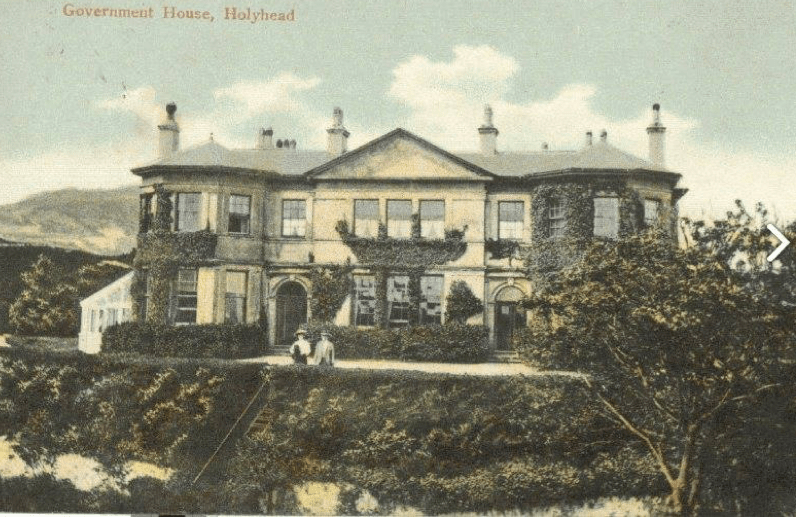
Soldiers’ Point House was completed in 1849 by Charles Rigby, the main contractor for the construction of the Breakwater, as his site residence. It was a magnificent creation with battlements, turreted border walls and castellated turrets and towers with a very large garden leading down to the shoreline.


A second house was built nearby to house James M Rendel, the Government Engineer, and also George Dobson, the Resident Engineer. Two separate areas of accommodation were provided with their own front door entrances. The building later became known as ‘Government House’, the residence of successive Harbour Masters.

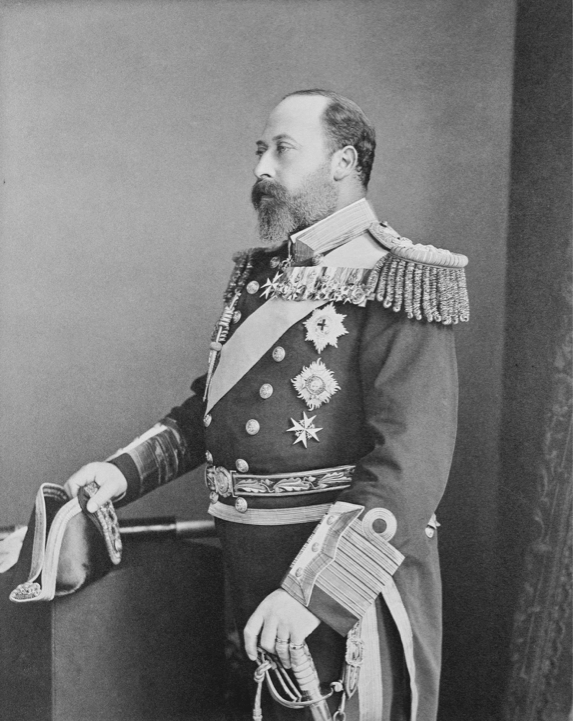
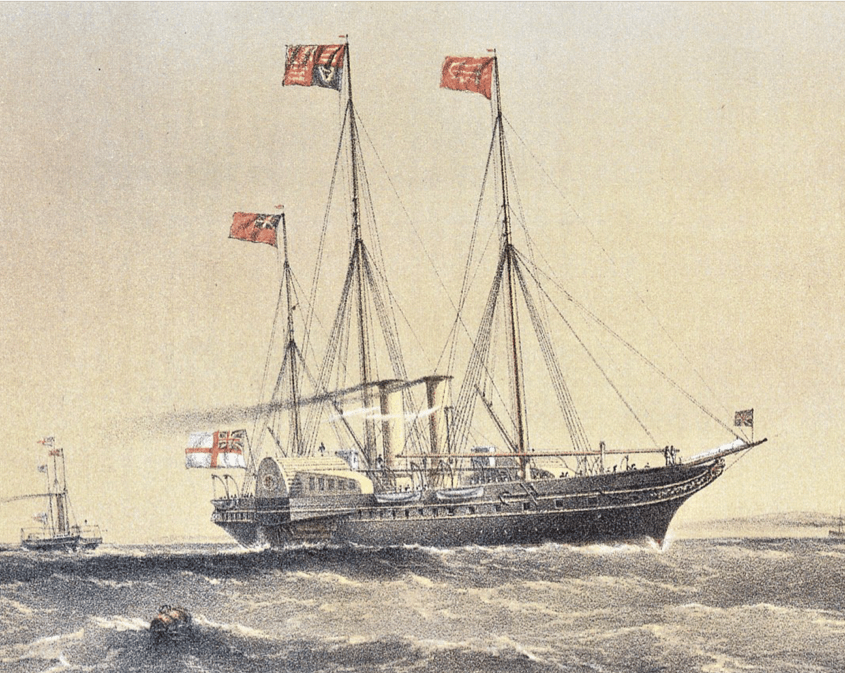
The formal opening of the Great Holyhead Breakwater took place during fine weather on the 19th August 1873. It was undertaken by Albert Edward, Prince of Wales, accompanied by the Duke of Edinburgh and the Prince of Leiningen, who all arrived in the Royal Yacht, ‘Victoria and Albert’.
In attendance were the Rt. Hon. Chichester Fortescue, President of the Board of Trade, Lord Penrhyn, Sir Watkin W Wynn, M.P., Hon. William Owen Stanley, Lord Lieutenant of Anglesey; the Mayors of Chester and Liverpool and members of the municipal authorities of Holyhead, Bangor and Rhyl together with a large section of the local nobility and gentry.
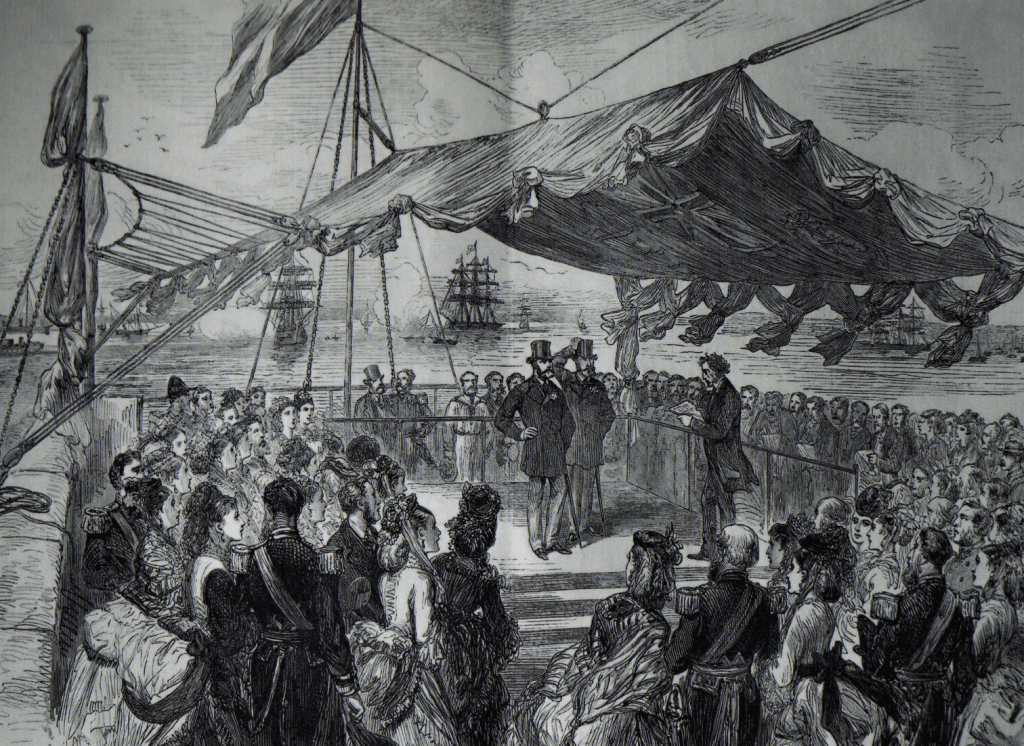
Chief Engineer John Hawkshaw described the building of the breakwater to the Royal party whilst travelling along its length in specially adapted and decorated railway trucks.
The guard of honour was provided by the 101st Regiment. Seven Ironclad ships of the Channel Fleet were at anchor within the harbour and they fired a salute so loud that it shook the town.
Reports mention that the town was well decorated with flags and banners and large crowds including many holiday makers assembled on the seashore to witness the events. The lifeboat house was also decorated and opened to visitors.
HOLYHEAD BREAKWATER – FACTS AND FIGURES
The Holyhead Breakwater is 1.7 miles (2.7 km) long and is the longest in the UK and second only in the world to San Diego, USA.
It encloses an area of over 650 acres to form a ‘Harbour of Refuge’ for shipping in the Irish Sea.
£85,681 was allocated by an Act of Parliament in 1847 for the purchase of land. The total cost was £1,285,000 (equivalent to about £115m today).
Some 7 million tons of stone was quarried from Holyhead Mountain to establish the foundations for the Breakwater.
Dressed stone weighing 10 tons each was shipped from Moelfre, Anglesey to form the main structure.
Some 1300 men were employed on the work. Most of these were from Wales and some from Ireland. Skilled men were also brought in from Somerset. There were sometimes significant disagreements and trouble between groups.
Divers in submarine bells created level foundations on which the tiers of facing stones were placed, Men worked underwater in air fed chambers using picks and hammers. Explosives were used in sealed pipes.
Unfortunately over 40 deaths and many injuries occurred during its construction.
Sources and References
- The Holyhead Breakwater and Quarries by Edwin Roland Owens (1997).
- Holyhead: The Story of a Port by D Lloyd Hughes and Dorothy M
Williams (1981). - The archives of Holyhead Maritime Museum.
- Images other than listed below are from the Holyhead Maritime Museum
archive of photographs and prints. - Cover image – Holyhead Breakwater and Harbour of Refuge – National
Library of Wales Collection (Creative Archive Licence). - Image of George Rowan Hutchinson Memorial Stone by permission of
Ron Jenkins. - Image of Captain George Rowan Hutchinson RE (internet search,
original source unknown). - Photograph of Government House (long view) from ‘Old Holyhead’
FaceBook Page (original source unknown). - Photograph of Soldiers’ Point with figures – from glass plate photo in
possession of Richard Burnell. - Photograph of Albert Edward, Prince of Wales from
http://www.royalcollection.org.uk (Wikimedia Commons). - Image of RMY ‘Victoria and Albert’ – painting by Williams Frederick
Mitchell (Wikimedia Commons).
Contributed by the Editor.
© Holyhead Maritime Museum.
 Holyhead: Stories of a Port